Why High Domain Rating Doesn’t Always Mean a High-Quality Backlink
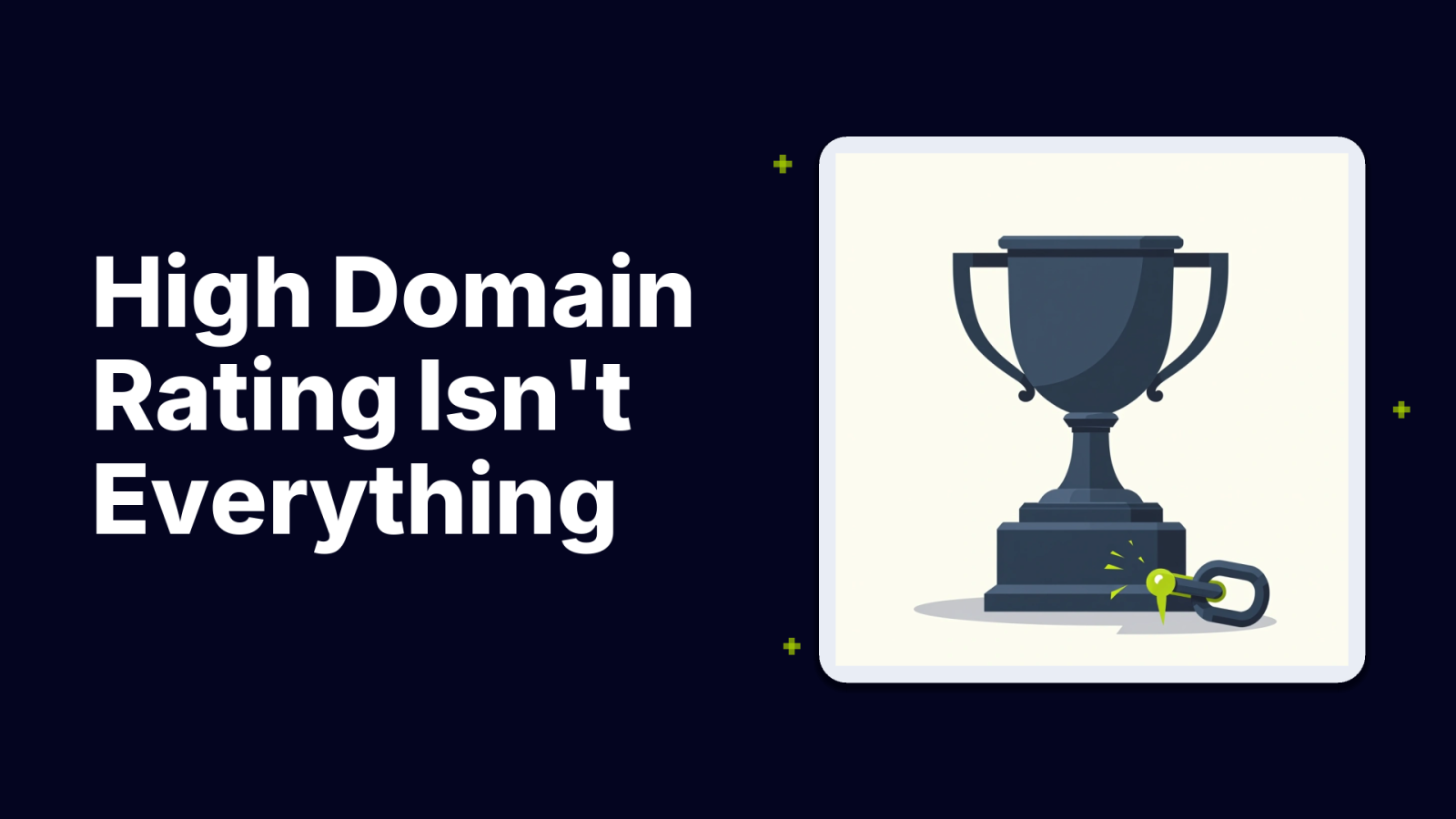
A website with a Domain Rating of 90 looks like an obvious choice for a guest post—until you discover it has weak content, declining rankings, and an audience that has nothing to do with your industry.
This is where many businesses go wrong. They assume a high Domain Rating automatically translates into a powerful backlink. In reality, Domain Rating measures only one aspect of a website’s authority. It doesn’t tell you whether the site attracts qualified visitors, publishes trustworthy content, or can actually strengthen your SEO strategy.
The best backlinks come from websites that combine authority with relevance, editorial quality, and genuine organic visibility. This guide explains why Domain Rating should never be your only decision-making factor and what you should evaluate instead before investing in guest posts.
What Domain Rating Actually Measures
Domain Rating (DR) is a third-party metric developed to estimate the strength of a website’s backlink profile. In simple terms, it reflects how many websites link to a domain and the authority of those referring websites.
While this makes DR useful for comparing backlink profiles, it does not represent Google’s ranking algorithm. Google has never confirmed that Domain Rating or similar metrics play any direct role in determining search rankings.
Treat DR as a helpful reference point rather than a final verdict on a website’s quality.
Why a High DR Doesn’t Guarantee a Valuable Backlink
One of the biggest misconceptions in SEO is believing that higher numbers always produce better results.
A website can build an impressive backlink profile over several years while gradually losing the qualities that make backlinks valuable. Its rankings may decline, its content may become outdated, or its editorial standards may weaken after shifting toward selling sponsored posts.
In these situations, the Domain Rating often remains relatively strong because backlink metrics change much more slowly than actual website quality.
This is why experienced SEO professionals evaluate the complete picture instead of making decisions based solely on a single authority score.
Relevance Has a Greater Impact Than Raw Authority
Search engines aim to understand relationships between topics, not just relationships between websites.
A backlink from a respected website within your own industry usually provides stronger contextual value than one from a completely unrelated domain with a much higher authority score.
Imagine a cybersecurity company earning a backlink from a well-known technology publication. Compare that with receiving a backlink from a general lifestyle website that happens to have a higher Domain Rating. Although both links may appear valuable, the industry-relevant publication sends much stronger topical signals.
This is particularly important for businesses investing in local SEO backlink services, where geographic and niche relevance often contribute more to long-term performance than authority metrics alone.
Organic Visibility Tells You Whether Google Actually Trusts the Website
A website’s relationship with Google is often reflected in its organic search performance.
Publishers that consistently rank for valuable keywords demonstrate that their content continues to satisfy search intent and maintain visibility over time. On the other hand, a high-DR website with declining rankings may indicate that its authority no longer translates into strong search performance.
Before purchasing any guest post, look beyond backlink metrics and evaluate whether the website continues attracting relevant organic visitors through high-quality content. A healthy organic presence is usually a stronger indicator of future value than Domain Rating by itself.
Content Quality Determines the Strength of Every Backlink
Even the most authoritative website cannot provide exceptional SEO value if its content lacks credibility.
High-quality publishers invest in accurate information, experienced writers, thoughtful editing, and articles that genuinely solve readers’ problems. Their pages earn links because they deserve attention, not because they exist solely to sell placements.
When reviewing a publisher, spend time reading several recent articles. The writing quality, topical depth, and consistency often reveal far more about the website than any numerical authority metric.
A backlink placed within useful, well-written content naturally carries greater long-term value than one surrounded by thin or generic articles.
Look Beyond the Metric and Evaluate the Website Itself
A high-quality backlink comes from a high-quality website—not simply a website with a high score.
Before purchasing any placement, spend a few minutes reviewing the publisher as if you were a real visitor. Ask whether the website looks active, trustworthy, and useful enough that someone would genuinely want to read its content.
Several indicators usually separate strong publishers from weak ones:
- The content is written for readers instead of search engines.
- Articles are updated regularly instead of being abandoned.
- The website focuses on a clear niche rather than publishing everything.
- Authors, categories, and editorial standards are easy to identify.
When these signals are present alongside healthy SEO metrics, you’re far more likely to earn a backlink that continues delivering value over time.
A Website Should Rank for More Than Just Its Homepage
Another mistake buyers make is checking only the homepage metrics. Strong websites build authority across hundreds of pages, not one. Their traffic comes from a wide range of articles that rank for relevant keywords, demonstrating consistent topical expertise.
If only a handful of pages generate nearly all of the site’s visibility, there is greater risk that future algorithm updates could significantly reduce its performance.
Take a look at the publisher’s top-performing pages. If those articles are closely related to your niche and continue attracting search traffic, the backlink is likely to provide stronger long-term SEO benefits.
Too Many Sponsored Posts Can Reduce Editorial Value
Publishing sponsored content is perfectly normal. Most reputable publishers accept guest posts when they meet editorial standards. The problem begins when almost every article exists solely to sell backlinks.
Websites overloaded with sponsored content often show obvious patterns. Topics jump from cryptocurrency to casinos, then health supplements, finance, real estate, and software without any clear editorial direction. Readers gain little value because the content serves advertisers rather than the audience.
A website that carefully balances informative content with occasional sponsored articles usually provides a far more natural environment for earning backlinks.
Don’t Ignore the User Experience
Search engines increasingly reward websites that provide a positive experience for visitors. Even if a publisher has excellent authority metrics, poor usability can reduce its overall quality.
Look for signs such as:
- Fast loading pages.
- Easy navigation between categories.
- Limited intrusive advertising.
- Mobile-friendly layouts.
- Well-structured articles that are easy to read.
These factors may not directly determine the strength of a backlink, but they often reflect whether the publisher genuinely invests in maintaining a reputable website.
Choosing the Right Marketplace Matters Just as Much
Even experienced marketers can struggle to evaluate hundreds of publishers individually. That’s why the marketplace you choose plays a significant role in the quality of backlinks you ultimately acquire.
Some self serve backlink platforms focus primarily on listing as many websites as possible, leaving buyers responsible for identifying quality publishers on their own. Others rely heavily on automatic link insertion tools, making it easier to secure placements quickly but not necessarily on websites that deserve your investment.
A more reliable approach is to work with a marketplace that prioritizes publisher quality, niche relevance, and sustainable SEO value instead of simply displaying authority metrics.
SERPInsight follows that philosophy. Rather than encouraging users to filter publishers by Domain Rating alone, the platform helps businesses evaluate websites through multiple quality signals, including relevance, organic performance, editorial standards, and overall publisher credibility.
This creates a more informed selection process and reduces the risk of investing in backlinks that look impressive on paper but contribute little to long-term SEO growth.
Whether you’re managing outreach for clients or searching for a dependable saas backlink marketplace, focusing on verified publisher quality instead of a single metric leads to stronger and more sustainable results.
Select Backlinks That Deliver More Than a Number
Domain Rating remains a useful SEO metric, but it should never become the deciding factor when evaluating backlink opportunities.
The strongest backlinks come from publishers that combine authority with relevant content, consistent organic visibility, trustworthy editorial practices, and audiences that genuinely match your industry. When these factors work together, a backlink becomes much more than another link in your profile, it becomes an asset that supports long-term search performance.
Instead of chasing the highest score available, invest your budget in publishers that demonstrate real quality. That approach consistently produces stronger SEO results than relying on Domain Rating alone.
Frequently Asked Questions
- Is Domain Rating important for SEO?
Yes, Domain Rating is a useful indicator of a website’s backlink strength. However, it should always be considered alongside factors such as content quality, relevance, organic traffic, and editorial standards.
- Can a lower DR website provide a better backlink?
Absolutely. A niche-relevant website with genuine organic visibility and high-quality content can often provide more SEO value than a higher-DR website with weak relevance or declining performance.
- Should I ignore Domain Rating completely?
No. Domain Rating is still a valuable comparison metric. The key is to treat it as one part of your evaluation rather than the only factor influencing your decision.
- How can I find trustworthy guest posting websites?
Choose publishers that demonstrate consistent organic growth, relevant content, strong editorial quality, and a natural backlink profile. Using a curated marketplace that emphasizes publisher quality can also simplify the selection process.
Create a free account, browse 5,000+ vetted sites, and place your first order today. No credit card required.
Sign Up Free →