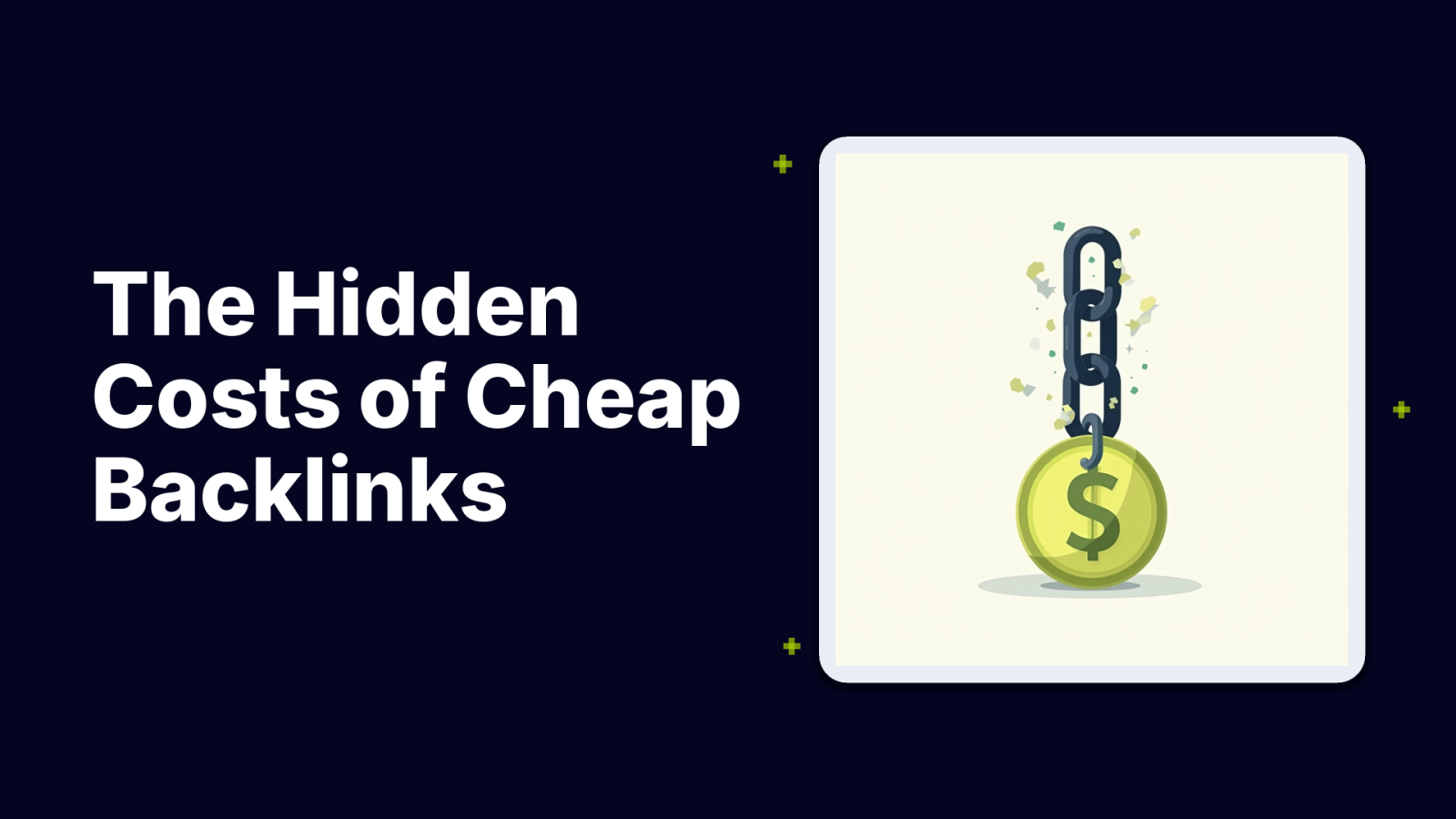
The Hidden Costs of Cheap Backlinks: Why Saving Money Can Cost You More
Every business wants better search rankings without overspending. That’s exactly why offers like “100 backlinks for $50” or “Guest posts from high-authority websites at unbelievably low prices” continue to attract website owners.
On the surface, these offers seem like an easy shortcut. You spend less today and expect more traffic tomorrow. Unfortunately, SEO rarely works that way.
The real hidden costs of cheap backlinks don’t appear immediately. They show up weeks or even months later when rankings fail to improve, organic traffic stagnates, or you discover that the backlinks you paid for were never providing any value in the first place.
Google has become remarkably effective at identifying manipulative link-building patterns. Rather than rewarding every backlink, its algorithms increasingly evaluate relevance, editorial quality, and overall trust before allowing a link to influence rankings. As a result, buying the cheapest backlinks often becomes one of the most expensive SEO decisions a business can make.
Cheap Backlinks Rarely Save You Money
Price and value are not the same thing. A backlink that costs $20 isn’t automatically a bargain, just as a $300 placement isn’t automatically worth the investment. What matters is whether the backlink contributes to long-term search visibility.
Many low-cost link packages rely on websites created primarily for selling backlinks. These sites often publish content across dozens of unrelated industries, accept almost every guest post submission, and exist with one goal, selling more links.
At first glance, the metrics may look convincing. The domain might have respectable authority scores, thousands of indexed pages, or an attractive backlink profile.
The problem is that these numbers don’t always reflect genuine trust. If Google doesn’t value the website, your backlink won’t provide the value you’re expecting, regardless of how inexpensive it was.
Cheap Links Often Deliver the Wrong Kind of Authority
One of the biggest misconceptions in SEO is that every backlink passes authority. It doesn’t. Google evaluates where the backlink comes from, why it exists, and whether it fits naturally within the surrounding content.
Imagine purchasing a guest post on a website that publishes articles about finance, pets, cryptocurrency, casinos, health, home improvement, and digital marketing—all within the same week. Even if the website reports decent metrics, it lacks topical focus.
Search engines are increasingly capable of understanding whether a website has built genuine expertise or simply accepts paid content from anyone willing to pay. Links from these kinds of publishers often provide far less value than businesses expect because the editorial standards behind them are weak.
The Biggest Loss Isn’t a Penalty—It’s Wasted Budget
When businesses think about buying cheap backlinks, they usually worry about penalties. Ironically, that’s often not the biggest risk.
Today, Google is more likely to ignore poor-quality backlinks than penalize every website that acquires them. That means your money disappears long before your rankings do. Instead of improving your visibility, the backlinks simply fail to pass meaningful authority, leaving you exactly where you started.
This is where many businesses lose twice. First, they pay for backlinks that produce little or no SEO benefit. Then, after months of waiting for results, they invest even more money replacing those ineffective links with higher-quality ones. The original budget becomes a sunk cost rather than an investment.
Cheap Guest Posts Can Create Long-Term SEO Problems
Not every inexpensive guest post violates Google’s guidelines, but problems arise when websites exist primarily to manipulate rankings instead of serving real readers.
This is where concerns around cheap guest post google penalty often begin.
Google’s spam policies focus on manipulative linking practices rather than pricing alone. If a website consistently sells followed backlinks without editorial oversight, participates in obvious link schemes, or publishes content solely to pass PageRank, those links become increasingly unreliable over time.
Even if your website never receives a manual action, backlinks from low-quality publishers may gradually lose their ability to influence rankings as Google’s systems become better at identifying artificial link patterns.
The result is frustratingly simple: you continue paying for backlinks while seeing fewer and fewer SEO improvements.
Cheap Link Building Focuses on Quantity Instead of Relevance
The appeal of cheap backlinks usually comes from volume. Packages promising 50, 100, or even 500 backlinks create the impression that more links automatically lead to higher rankings.
In reality, Google’s algorithms don’t reward volume alone. A single editorial backlink from a respected website in your niche can provide more long-term value than dozens of links from unrelated blogs with little organic visibility.
This is why successful SEO campaigns rarely measure progress by the number of backlinks acquired. They measure the quality, relevance, and trustworthiness of every referring website. Businesses that prioritize volume over relevance often discover that they’ve built a large backlink profile without building meaningful authority.
Low-Cost Link Building Can Become Expensive Later
The true price of a backlink isn’t what you pay today—it’s what it costs to fix tomorrow if things go wrong.
Many businesses realize this only after their SEO campaign stops delivering results. They spend months building links, expecting steady growth, but eventually discover that many of those placements were published on websites with declining traffic, weak editorial standards, or little topical relevance.
By that stage, the issue isn’t simply replacing a few backlinks. The entire strategy often needs to be rebuilt. This is one of the overlooked cheap link building roi risks. While inexpensive backlinks may reduce your upfront expenses, they can produce a very poor return on investment if they fail to improve rankings, generate traffic, or support long-term authority.
A successful SEO campaign isn’t measured by how little you spend, it’s measured by the business growth those backlinks generate over time.
Recovering from Poor-Quality Backlinks Isn’t Free
Replacing weak backlinks is only one part of the recovery process. In many cases, businesses also spend additional time auditing their backlink profile, identifying low-quality referring domains, and creating a completely new outreach strategy.
For larger websites with years of SEO history, this process can become both time-consuming and expensive. The devalued backlinks cleanup cost is often much higher than people expect because the money isn’t spent only on removing bad links. It also includes:
- Professional backlink audits.
- New content created for quality guest posting.
- Outreach campaigns to reputable publishers.
- Lost rankings and missed business opportunities during recovery.
Instead of investing once in high-quality placements, many businesses end up paying twice—first for ineffective backlinks and then for a stronger strategy to replace them.
Not Every Bad Backlink Needs to Be Removed
A common misconception is that every poor-quality backlink should be deleted immediately.
That’s rarely necessary. Google has repeatedly explained that its algorithms are designed to ignore many low-value links automatically. In other words, a weak backlink doesn’t always mean your website is at risk.
However, there are situations where action becomes necessary. If your backlink profile contains a significant number of manipulative guest posts, obvious paid links, or spammy referring domains created solely to influence rankings, reviewing those links is a sensible step.
In more serious cases, website owners may choose to disavow toxic guest post links after carefully auditing their backlink profile. The disavow tool should be treated as a last resort rather than a routine SEO task, because removing the wrong links can eliminate authority that still benefits your website.
The better approach is to prevent the problem from happening in the first place by choosing trustworthy publishers before purchasing any guest post.
Invest in Publishers, Not Just Backlinks
One of the simplest ways to improve your link-building results is to change how you evaluate opportunities. Instead of asking, “How many backlinks will I receive?” ask, “Is this a website I genuinely want my brand associated with?”
Publishers that consistently rank in Google, maintain editorial standards, and cover topics relevant to your industry usually provide far greater long-term value than websites built primarily for selling guest posts.
A quality publisher doesn’t just pass authority. It also strengthens your brand credibility, places your content in front of the right audience, and creates opportunities for natural backlinks in the future. That’s an investment that continues delivering value long after the guest post has been published.
Conclusion
Cheap backlinks often look like an easy way to reduce SEO costs, but the lowest price rarely delivers the best value.
Links from low-quality publishers may never contribute to meaningful rankings, and replacing them later can require far more time, money, and effort than investing in reputable websites from the beginning.
Instead of judging guest posting opportunities by price alone, evaluate the publisher’s organic visibility, topical relevance, editorial quality, and long-term search performance. These factors have a much greater impact on SEO success than the cost of a single placement.
The most successful link-building strategies aren’t built on finding the cheapest backlinks—they’re built on earning links that continue delivering value long after they’re published.
Frequently Asked Questions
1. Are cheap backlinks always bad for SEO?
No. A lower price doesn’t automatically mean a backlink is low quality. The real value depends on the publisher’s relevance, organic traffic, editorial standards, and overall trustworthiness.
2. Can buying cheap guest posts lead to a Google penalty?
Not necessarily. Google focuses on manipulative link schemes rather than price. However, websites that sell large volumes of low-quality guest posts without editorial standards are far more likely to produce backlinks that Google ignores or devalues.
3. Why do inexpensive backlinks often fail to improve rankings?
Many cheap backlinks come from websites with weak authority, declining organic traffic, or little topical relevance. Even if they remain indexed, they may pass little or no ranking value.
4. Should I remove every low-quality backlink I find?
Usually not. Google ignores many poor-quality links automatically. Review your backlink profile carefully before taking action, and only consider removing or disavowing links when they are clearly manipulative or part of a broader spam problem.
5. What’s a better alternative to buying cheap backlinks?
Focus on earning placements on reputable, niche-relevant websites with consistent organic traffic and strong editorial standards. Fewer high-quality backlinks typically produce better long-term SEO results than a large number of inexpensive, low-value links.
Create a free account, browse 5,000+ vetted sites, and place your first order today. No credit card required.
Sign Up Free →