How to Spot Spammy Guest Posting Websites Before You Buy
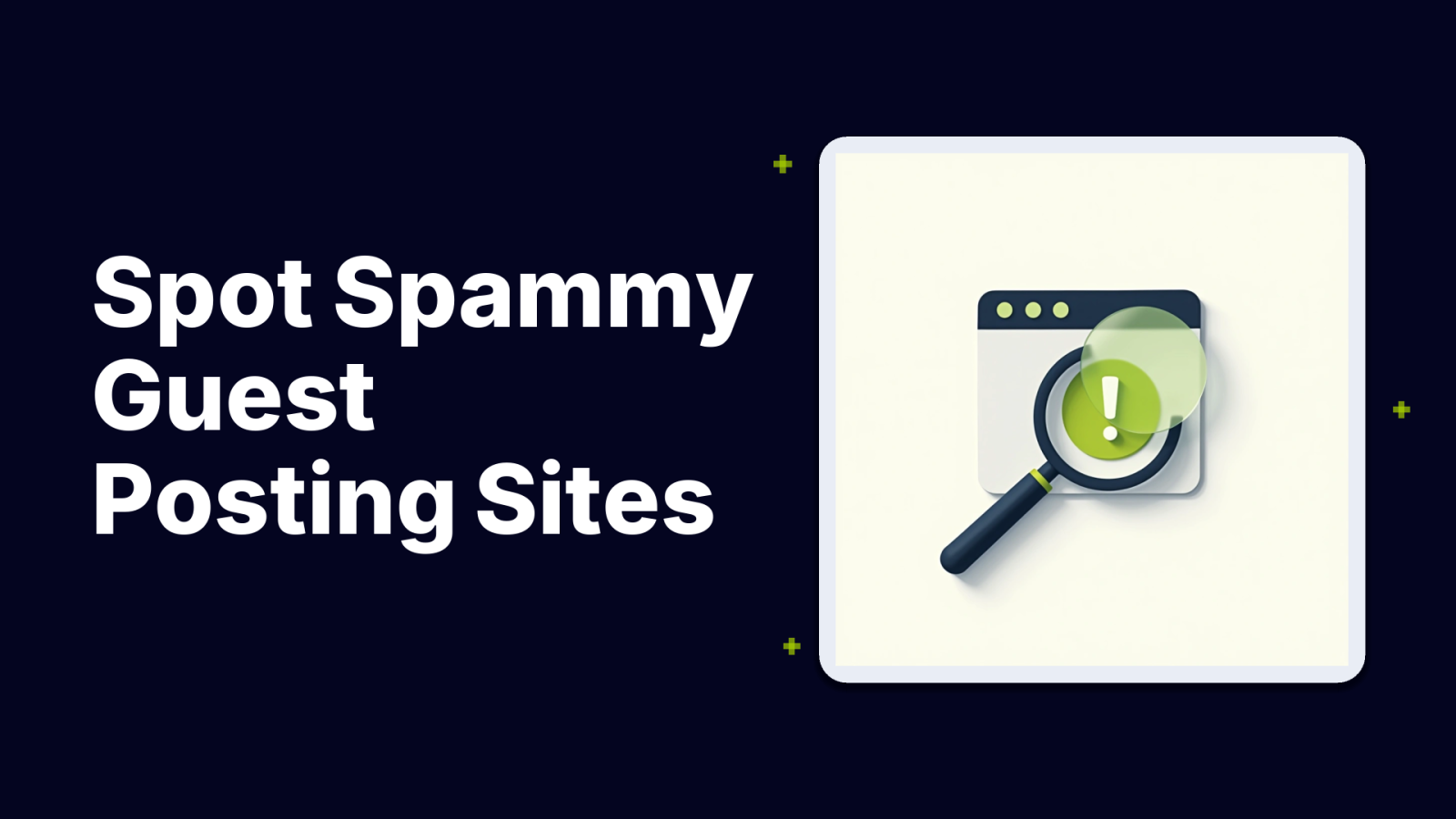
A website can have a high authority score, thousands of monthly visitors, and a professional-looking design, and still be a terrible place to buy a backlink.
That is what makes spammy guest posting websites so difficult to identify. The obvious ones are easy to reject, but the more dangerous sites know how to look legitimate. They display impressive metrics, publish polished articles, and make every placement appear like a valuable SEO opportunity.
The real test begins when you stop looking at what the website claims to be and start examining what it actually does.
Before you spend money on a guest post, investigate the publisher from several angles. These checks can reveal problems that a quick glance at an SEO tool will never show.
1. Check Whether the Website Has a Real Identity
Start with the simplest question: Who is this website for? A legitimate publication usually has a clear identity. You can understand its subject, audience, and purpose within a few minutes of browsing.
Spam-heavy websites often feel different. Their categories may cover everything from cryptocurrency and healthcare to home improvement, gambling, software, and fashion without any clear connection between them.
That broad coverage isn’t automatically proof of a bad website. Large publications can cover multiple subjects. The warning sign appears when the site has no recognizable editorial direction and every category seems designed to accommodate another type of paid content.
If you cannot figure out why the website exists beyond publishing articles with backlinks, pause before buying.
2. Read the Last 20 Articles, Not the Featured Ones
Sellers will naturally show you their best placements. Instead of reviewing the articles they send you, open the website and examine its recent publishing history yourself. Look at the last 15–20 articles and identify patterns.
Do the articles have different authors and genuine editorial variety? Are they written for readers, or do they all follow a similar formula designed around inserting commercial anchors?
Pay particular attention to sudden bursts of content. A website that normally publishes two articles a week but suddenly uploads 40 promotional posts may be operating primarily as a link-selling property. One questionable article proves little. A consistent pattern tells you much more.
3. Look for “Keyword Soup” in the Content
Spammy publishers often accept articles across an enormous range of industries because their business model depends on selling placements.
You may notice articles targeting phrases that sound unnatural or excessively commercial. One post might be built around a financial keyword, another around a medical service, and another around a product category with little connection to the site’s usual subject. The problem isn’t simply that these topics are different. It is the lack of editorial logic behind them.
A genuine publication asks whether a topic belongs to its audience. A link-selling site asks whether someone is willing to pay for the placement. That difference often becomes obvious when you read enough of the site’s recent content.
4. Investigate the Authors
Author pages can reveal more than most people realize. Click on several bylines and see whether the writers have a consistent presence across the website. Do they have biographies? Do they write about a recognizable subject? Does their content demonstrate any expertise?
Be cautious when every article comes from a different author with no background information, no profile, and no visible connection to the publication.
Anonymous contributors aren’t automatically a problem, but a website filled almost entirely with disposable author identities deserves additional scrutiny. A real editorial operation usually leaves some evidence that people are actually responsible for the content.
5. Examine Links Within Older Articles
Don’t just inspect the article you are planning to purchase. Open older posts from several months ago and click through their links.
You may discover that many previously published articles contain links to businesses in completely unrelated industries. You may also find that the same types of commercial phrases appear repeatedly across different posts.
Another useful check is to see whether the links lead to genuine resources or primarily to businesses trying to manipulate search visibility. The more a site’s historical content resembles a catalogue of paid placements, the less attractive the opportunity becomes.
6. Look for Traffic That Doesn’t Match the Website
Traffic data requires interpretation. A site might show strong numbers in an SEO tool, but that doesn’t mean the traffic is valuable or stable. Investigate which pages generate the visits and what search terms bring users to the site.
If 90% of the site’s visibility comes from one viral article, an outdated listicle, or an unrelated topic, the overall traffic figure may be misleading.
You should also look at geographic distribution. A publisher with impressive global traffic may be irrelevant if your business needs visibility in a specific country or market. Traffic matters most when it reflects a genuine audience that overlaps with the people you want to reach.
7. Check How Quickly the Website Publishes
Publishing frequency can expose the site’s business model. A publication that releases a reasonable number of carefully edited articles may have a healthy editorial workflow. A website that uploads dozens of posts every day across unrelated categories may be prioritizing volume.
Look at timestamps across the site. If you find multiple articles published within minutes of each other, especially across completely different industries, investigate further.
The issue isn’t speed itself. The question is whether the website has enough editorial capacity to review what it publishes. When content production becomes too fast to be credible, quality control is usually the first thing to disappear.
8. Search for Signs of a Website That Has Changed Hands
A domain’s current appearance doesn’t always tell its full story. Use historical information to understand how the website has evolved. A domain that previously served one audience but now publishes completely different content may have undergone a major transformation.
For example, a once-active industry blog that suddenly becomes a general publishing site filled with commercial guest posts deserves closer examination.
A change in ownership isn’t automatically negative. Businesses buy websites all the time. But a dramatic shift in topic combined with a sudden increase in paid content can indicate that the domain’s existing authority is being used primarily as an SEO asset.
9. Don’t Let a Seller Choose Your Evidence
One common mistake is evaluating a publisher using only the information provided by the person selling the placement. If a vendor sends you a screenshot showing traffic and authority metrics, treat it as a starting point, not a final verdict.
Open the website yourself. Check the data through your preferred SEO tools. Review the content history and inspect the links. The more independent checks you perform, the harder it becomes for a weak publisher to hide behind attractive numbers. A trustworthy seller should have no problem with reasonable due diligence.
10. Be Suspicious of Guaranteed SEO Outcomes
No legitimate guest post provider can guarantee that one placement will deliver a specific ranking improvement.
SEO involves too many variables, including competition, content quality, technical performance, search intent, and the strength of competing websites. Be careful when a seller promises guaranteed rankings, instant traffic, or a fixed increase in domain authority simply because you purchased a placement.
A responsible provider can explain what the placement offers. It cannot control how search engines ultimately evaluate your entire website. Promises that sound too certain often deserve more scrutiny than the placement itself.
11. Ask What Happens If the Link Disappears
Before buying, understand the provider’s policies. What happens if the article is removed? What if the website goes offline? Does the publisher replace the article, replace the link, or offer nothing?
These questions become particularly important when businesses use white label guest posting services and rely on an external provider to manage placements for their clients.
You don’t need a complicated guarantee, but you should know what you’re actually paying for and what support exists after publication. A transparent process is usually a better sign than an impressive sales pitch.
12. Don’t Confuse Cheap With Efficient
A low-priced guest post can look attractive when you’re comparing dozens of offers.
But the true cost may become much higher if you spend months building links that provide little value or later need to clean up questionable placements.
This is especially relevant for businesses considering managed link building for startups. New websites have enough challenges without building an unnatural backlink profile simply because a package promises hundreds of links at a bargain price.
The smarter question is not “How many links can I get for this budget?”
Ask instead: “What kind of website am I attaching my brand to?”
Your answer should influence your buying decision more than the number of placements included in a package.
What Should You Do Before Buying?
You don’t need to become a professional SEO auditor to avoid obvious mistakes.
You need a repeatable way to investigate publishers before committing your budget. Review the site’s content history, audience, authors, traffic sources, publishing frequency, outbound links, and overall identity.
If you’re working with agencies or planning to hire blogger outreach vendors, apply the same scrutiny to their process. Ask how they select publishers instead of accepting a spreadsheet of domains at face value.
The best providers won’t be offended by careful questions. They should welcome them because transparency makes it easier to build long-term relationships.
A Better Filter for Guest Post Opportunities
The hardest part of guest posting isn’t finding a website that will publish your article. It is finding one that you would be comfortable associating with your brand even if the backlink didn’t exist.
That is a useful standard to apply when exploring opportunities through SERPInsight. Instead of viewing publisher selection as a simple transaction, you can use the platform to discover potential placements and then evaluate them through the same critical lens you would apply to any publication.
The goal is not to buy the first website that accepts your article. It is to recognize which opportunities are worth your attention before you spend your budget.
That shift, from “Can I get a link here?” to “Should my brand appear here?”, can completely change the quality of your guest posting strategy.
The Five-Minute Rule Before You Buy
Before purchasing any placement, spend five minutes investigating the website independently.
Read its latest articles. Check the authors. Look at the links. Examine its traffic. Search its history. Then step back and ask whether it feels like a publication with an audience or a domain with inventory.
You won’t catch every bad website this way, but you’ll eliminate many of the obvious risks.
Guest posting can be a valuable part of SEO when publishers genuinely contribute something to the web. The safest approach is to treat every placement as a publishing decision first and an SEO decision second.
Because once your backlink goes live, it isn’t just the link that becomes associated with your website.
The publisher does too.
Frequently Asked Questions
1. How can I tell if a guest post website is spammy?
Look for unrelated topics, excessive commercial links, thin content, anonymous authors, unusually high publishing volumes, and a lack of clear editorial purpose.
2. Is a high Domain Authority enough to trust a publisher?
No. Authority metrics should be only one part of your evaluation. Always examine traffic quality, relevance, content, and the website’s publishing history.
3. Should I avoid websites that publish guest posts?
No. Many legitimate publications accept contributed content. The key is whether they maintain editorial standards and publish content that genuinely serves their audience.
4. What should I ask a guest post provider before buying?
Ask how they select publishers, how they verify website quality, what happens if a placement disappears, and whether you can review the publisher before approving the order.
Create a free account, browse 5,000+ vetted sites, and place your first order today. No credit card required.
Sign Up Free →