9 Ways How to Find Niche-Relevant Publishers Without Manual Outreach
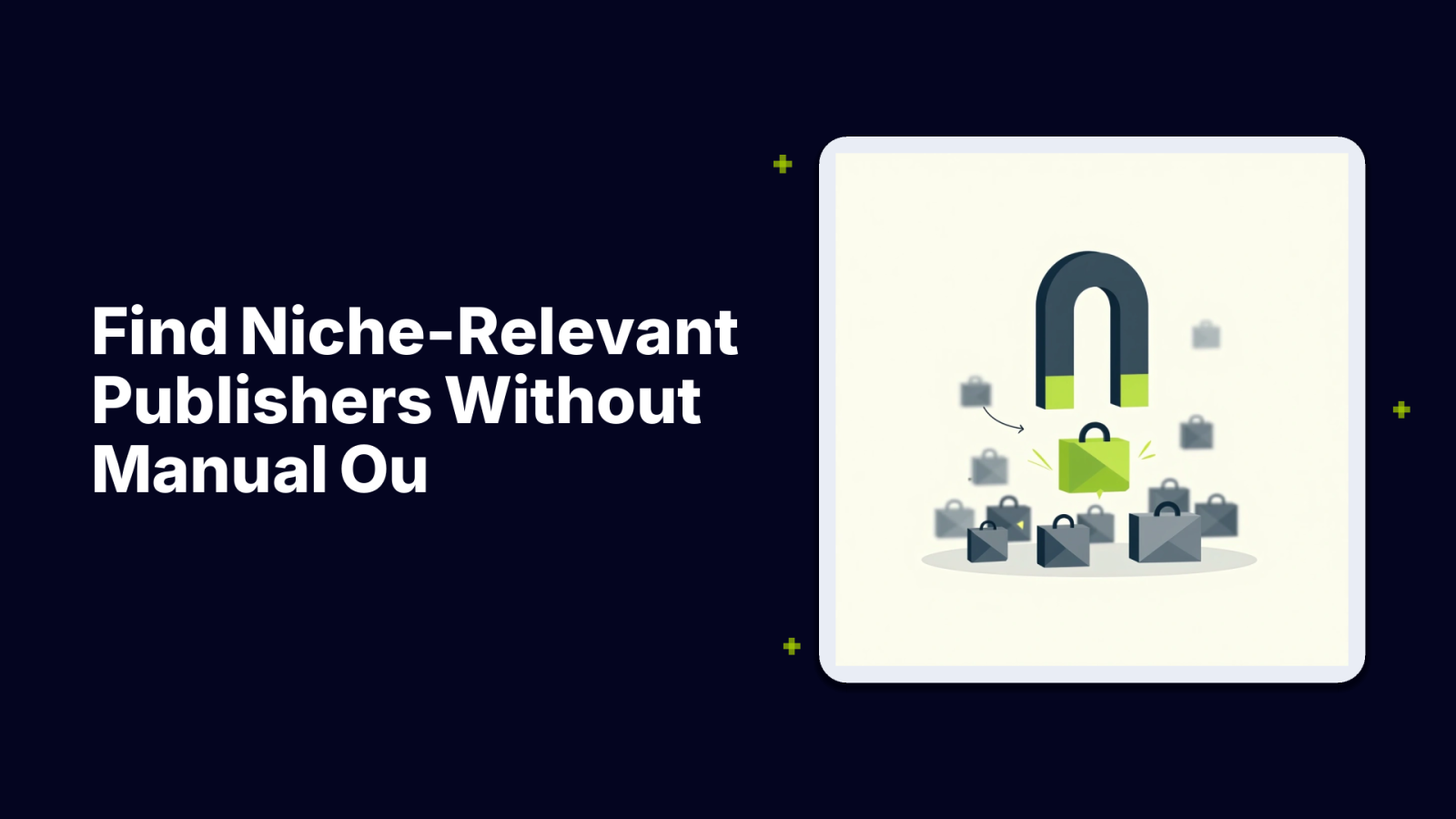
Finding a publisher is easy. Finding one that actually makes sense for your brand is where the real work begins.
You can spend hours searching Google, opening dozens of websites, checking metrics, finding contact details, and sending emails, only to discover that most of the publishers you contacted aren’t relevant enough to justify a placement.
The problem becomes even bigger when you need to build links at scale. Manually researching every potential website simply doesn’t remain practical.
Fortunately, you don’t have to choose between relevance and efficiency. With the right discovery methods, you can identify publishers that match your niche without turning outreach into a full-time job.
Here are nine practical ways to make the process faster and more precise.
1. Start With the Audience You Want to Reach
Many marketers begin publisher research by searching for websites in their industry. That sounds logical, but it can produce a huge list of sites that have little actual connection to your customers.
Instead, start with your audience.
Ask where your potential customers read, learn, compare products, and look for advice. A SaaS company might target startup publications, technology communities, or business resources. A local service provider may benefit more from regional publications and industry-specific websites.
This approach changes the question from “Which websites cover my niche?” to “Which websites already attract the people I want to reach?” That small shift can make publisher research much more productive.
2. Build a Publisher Profile Before You Search
Without clear criteria, publisher discovery quickly becomes overwhelming. Before looking for opportunities, create a simple profile that describes your ideal publisher. Include factors such as topic relevance, audience location, traffic quality, content standards, authority, and acceptable price range.
You can also define publishers you don’t want.
For example, you may decide to exclude sites with excessive sponsored content, unrelated categories, weak organic visibility, or a history of publishing low-quality articles.
Having these criteria in advance makes filtering much easier. Instead of evaluating every website from scratch, you can quickly identify which opportunities deserve closer attention.
3. Use Competitor Backlinks as a Discovery Shortcut
Your competitors have already done some of the research for you. Look at the websites that link to competing businesses and identify publishers that regularly feature content from your industry.
This doesn’t mean you should copy every backlink they have. Some may be irrelevant, outdated, or low quality.
Instead, use competitor backlink profiles to discover publications you may not have found through ordinary Google searches.
If a publisher has featured several credible brands in your niche, it may already understand your industry’s audience and content expectations. That can make it a more promising prospect than a random website that simply accepts guest posts.
4. Search by Topic Relationships, Not Just Exact Keywords
A narrow keyword search can limit your publisher list. Suppose you’re promoting an SEO software product. Searching only for “SEO websites” may return the same familiar publications repeatedly.
Expand your thinking. Look for websites covering content marketing, digital strategy, entrepreneurship, SaaS growth, business technology, or startup marketing. These topics may overlap with your target audience even if they don’t use your exact keyword.
This is particularly useful when exploring saas guest posting platforms. The best opportunities aren’t always labeled specifically as SaaS publications.
Think in terms of topic ecosystems rather than isolated keywords.
5. Let Technology Handle the Repetitive Research
Manual outreach usually involves several repetitive tasks: searching for websites, collecting domains, checking metrics, finding contact information, and organizing prospects.
These tasks are necessary, but they don’t all require human judgment. Technology can help reduce the workload.
For example, automated guest posting tools can assist with prospect discovery, filtering, and campaign organization. The benefit comes from using automation to handle repetitive work while keeping human judgment involved in the final selection.
A tool can help you find 500 potential websites. It cannot automatically determine which 20 are genuinely worth associating with your brand. That decision still requires context.
6. Look for Publishers That Already Understand Your Industry
A publisher doesn’t necessarily need to focus exclusively on your niche. What matters is whether it has demonstrated an understanding of the subject you’re writing about.
Review its existing content. Does it publish detailed articles on related topics? Do the contributors appear knowledgeable? Does the site attract discussions around your industry?
For example, a cybersecurity company might find a strong opportunity on a broader technology publication that regularly covers data privacy and online security.
The publisher’s broader category matters less than the actual relationship between its content and your expertise.
7. Use Publisher Marketplaces to Replace Hours of Searching
Traditional outreach requires you to discover a website, identify the right contact, write a pitch, wait for a response, negotiate terms, and manage the placement. That process can consume enormous amounts of time.
A cheap guest post marketplace can simplify some of this work by bringing publishers and buyers into the same environment. Instead of starting every relationship from zero, marketers can explore available opportunities and compare potential placements more efficiently.
However, convenience should never eliminate evaluation. You still need to check whether the publisher fits your niche, whether its audience is relevant, and whether its content quality meets your standards. The marketplace should reduce the administrative burden, not replace your judgment.
8. Create Different Publisher Lists for Different Campaigns
One giant spreadsheet of “potential publishers” is rarely useful for long. A better system separates opportunities based on campaign objectives.
You might maintain one list for industry publications, another for local websites, another for SaaS audiences, and another for broader business publications. You can also organize publishers by audience location, content category, authority level, or campaign priority.
This makes future campaigns faster because you aren’t starting from scratch every time. It also prevents you from approaching the same publishers repeatedly when your campaigns target different audiences.
9. Choose Opportunities Based on Fit, Not Just Availability
The easiest publisher to find isn’t necessarily the best publisher to use. Some websites are highly visible in link-building marketplaces because they accept large volumes of guest posts. Others may be harder to discover but offer stronger topical relevance and a more engaged audience.
This is where the quality of your discovery process becomes more important than the size of your publisher list. SERPInsight can be useful here because it shifts the focus from endlessly hunting for websites toward exploring opportunities that can be assessed as potential fits for a campaign.
Instead of treating publisher discovery as a race to build the biggest database, the better approach is to narrow your attention to opportunities that are actually worth considering. The objective is simple: spend less time finding websites and more time choosing the right ones.
Stop Treating Publisher Research Like a Search Marathon
Finding niche-relevant publishers doesn’t have to mean opening hundreds of browser tabs every month. Start with your audience. Define your criteria. Study competitor link profiles. Expand into related topics. Use technology for repetitive research and marketplaces to simplify the logistics.
Most importantly, don’t confuse a large publisher list with a useful publisher list. Ten websites that genuinely match your niche, audience, and campaign goals can be more valuable than hundreds of random domains.
The most efficient approach combines technology with judgment. Let tools handle the repetitive work, use marketplaces to simplify discovery, and reserve your attention for the decisions that actually require experience.
That way, you can build a publisher network that grows with your campaigns—without spending every week manually searching, emailing, and waiting for replies.
Frequently Asked Questions
1. What makes a publisher niche-relevant?
A niche-relevant publisher covers topics connected to your industry or reaches an audience that overlaps with your target customers.
2. Can I find relevant publishers without sending cold emails?
Yes. Competitor backlink research, publisher marketplaces, databases, and specialized discovery platforms can help you identify opportunities without traditional one-to-one outreach.
3. Should I choose publishers based on Domain Rating alone?
No. Consider topical relevance, audience quality, organic visibility, content standards, and the publisher’s overall credibility alongside SEO metrics.
4. Are publisher marketplaces better than manual outreach?
They can be more efficient for finding and managing placements, especially at scale. However, you should still evaluate each publisher before committing to a placement.
5. How many publishers should I have in my outreach database?
There is no ideal number. A smaller database of carefully selected, relevant publishers is usually more useful than a massive list filled with unsuitable websites.
Create a free account, browse 5,000+ vetted sites, and place your first order today. No credit card required.
Sign Up Free →